Yorktown 1781: The Siege and Surrender That Decided the Revolution
Key Points
- At two in the afternoon on October 19, 1781, the British garrison at Yorktown, Virginia, marched out and laid down its arms in a field outside of Yorktown.
- On October 14, 400 Americans under Alexander Hamilton and 400 French soldiers stormed Redoubts 10 and 9, and the whole operation took less than half an hour.
- Washington refused the British the customary honors of war, which an American army captured at Charleston in May 1780 had not been given.
- The American Battlefield Trust lists 7,416 British missing and captured, and the final Treaty of Paris was signed on September 3, 1783.

At two in the afternoon on October 19, 1781, the British garrison at Yorktown, Virginia, marched out along the York-Hampton Road6 and laid down its arms in a field outside of Yorktown8. The siege that put it there had lasted from September 28 to October 197, and the American Battlefield Trust says it marks the collapse of the British war efforts7. Monday, October 19, 2026, is the 245th anniversary.
How Cornwallis got trapped
With his back to the York River, Lord Cornwallis intended to resupply and refit his 9,000 man army8 in the fall of 1781. The plan to catch him there relied on a French fleet commanded by Adm. Comte de Grasse7, while Washington and the French general Rochambeau would move their force of almost 8,000 men south to Virginia7 from New York.
De Grasse reached the bay before Graves did. His fleet had 37 ships, including 28 ships-of-the-line2, and the British fleet under Admiral Graves had left New York on August 31 with 19 ships-of-the-line2. The two fleets met on September 5 off the mouth of the Chesapeake, in what is called the Battle of the Capes. At 4:15 PM, the action finally began2, and it lasted over two hours2. The British came out of it with six ships damaged and 90 sailors killed and 246 wounded2, against 209 French casualties. Graves then sailed his fleet to New York, leaving the French in control of the Chesapeake Bay2.
The siege
After a forced march from New York, the French and American army arrived near Yorktown, Virginia on September 288. By the evening of October 6 the allies were ready to open their First Allied Siege Line4. The guns opened on October 9, with the French battery firing first, and the National Park Service handbook on the siege says Washington seemingly, fired the first round4 from the American battery that followed.
The second siege line needed to reach the river, and two British earthworks stood in the way, Redoubts 9 and 10. Redoubt 10, near the river, was manned by about 70 soldiers4, and Redoubt 9 by approximately 125 troops4. The allies attacked both at once, after dark, on October 145. Washington picked a moonless night8, and the soldiers were told not to load or prime their weapons8 so they would not give themselves away.
Lieutenant Colonel Alexander Hamilton led the 400 Americans5 who went at Redoubt 10, and a party of 400 French soldiers under Col. William Deux Ponts5 took Redoubt 9. Hamilton's men held their objective within 10 minutes5, with a loss of 9 killed and 31 wounded, and the whole operation took less than half an hour5. The French paid more, with losses of almost 25 percent, including 15 killed5. The American Battlefield Trust puts Hamilton's losses at only 34 casualties7.
Cornwallis tried twice more. On the night of October 15 he sent a sortie, 350 strong, under Lt. Col. Robert Abercrombie5, against the new allied line, and it accomplished little5. The next night he tried to ferry his army across the river to Gloucester Point, but he was short of boats, and a storm about midnight further interfered with the operation5.
The terms, written at the Moore House
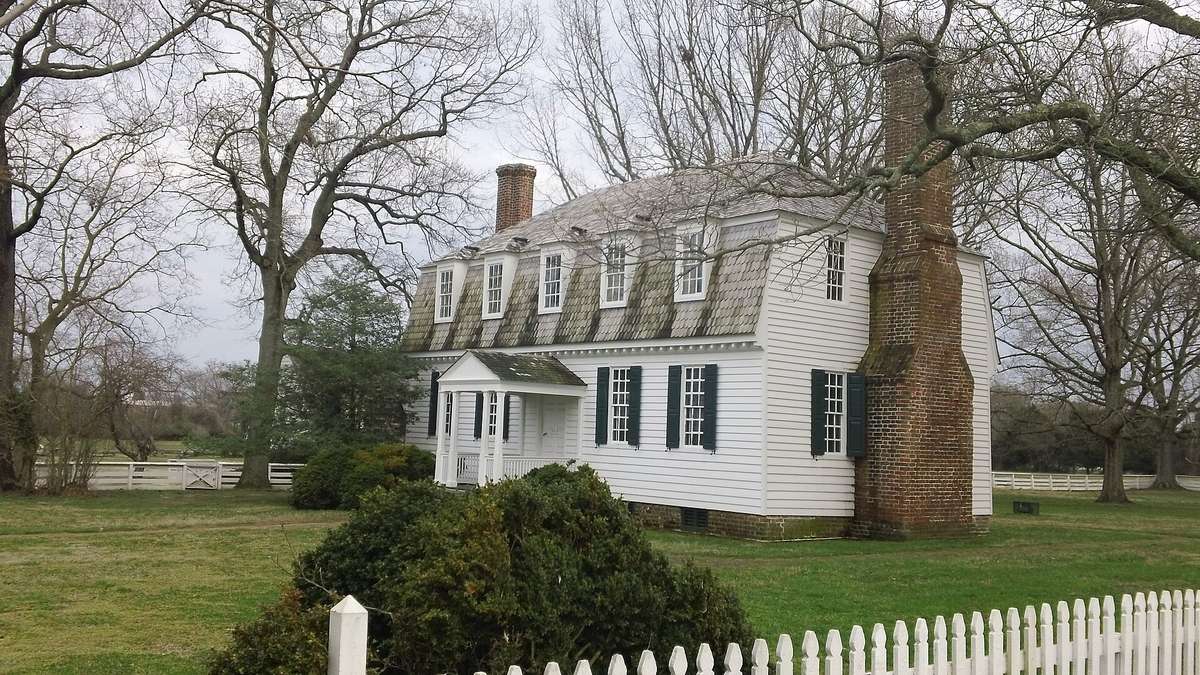
On the morning of October 17, a drummer in red, accompanied by an officer5, appeared on the British parapet to beat for a parley. Cornwallis's letter to Washington opened, “Sir, I propose a cessation of hostilities for twenty-four hours”1, and asked that commissioners meet at the house of Augustine Moore, a plantation house that was well outside the line of siege fire, and therefore, not damaged1.
The negotiators sat down there on the afternoon of October 181. Lieutenant Colonel Thomas Dundas and Major Alexander Ross spoke for Britain, facing Lieutenant Colonel John Laurens, for the Americans, and Second Colonel Viscount de Noailles1 for the French. The 14 articles they produced covered everything from the troops and artillery to the ceremony itself, and by the afternoon of October 19th, 1781, both commanders had signed1.
The first article made the garrisons of York and Gloucester prisoners of war to the combined forces of America and France10, with the soldiers going to the United States and the seamen to the French navy. Washington refused the British the customary honors of war. In May 1780 an American army was captured at Charleston, South Carolina and not given the honors of war1, and his reply on that point was short: “The same honors will be granted to the surrendering army as granted to the garrison of Charlestown.”1 So Article III had the garrison march out with shouldered arms, colors cased, and drums beating a British or German march10.
The ceremony
Cornwallis did not lead the march. He was ill6, and Brigadier General O'Hara led the troops out in his place. At the head of the allied column, O'Hara appears to have sought first the Count de Rochambeau, but was referred to Washington6, who sent him in turn to Major General Lincoln, who accepted his sword, the token of defeat and surrender, and then returned it6.
After that the British column marched between columns of allied troops6, with the Americans on one side of the road and the French on the other, and stacked its muskets at what is now Surrender Field.
The American Battlefield Trust's battle summary lists 7,416 British “missing & captured”7, while its history of the prisoners describes almost 8,000 British, German, and American Loyalist troops9 under Cornwallis at Yorktown. When the prisoners marched away, roughly 2,000 wounded and sick soldiers9 were left behind in the care of British surgeons.
What it ended, and what it did not
The news reached London on November 25, 1781, and, by the Park Service's chronology, Prime Minister Lord North is said to have exclaimed, “Oh God, it is all over.”3 The same chronology dates Parliament's move to authorize the King to negotiate an end to the war3 to February 28, 1782. Facing a motion of no confidence, Lord North resigned on March 203.
Peace still took almost two years. Benjamin Franklin opened formal negotiations on September 27, 178211, joined by John Adams and John Jay, and preliminary articles were signed in Paris on November 30, 178211. In them, Britain accepted American independence and boundaries11. The final Treaty of Paris was signed on September 3, 178311, which, in the Park Service's words, ends the war and establishes American independence3.
Trivia
Which 44-gun British ship burned in the York River on the night of October 10?
The Charon4. It was set on fire along with two transports and burned completely.
When did the British relief fleet finally leave New York for Yorktown?
By the Park Service's account, contrary winds, difficulty getting replacement parts and slow repairs held it in port until October 192, the same day Cornwallis surrendered.
Who signed the Articles of Capitulation alongside Cornwallis for the British?
Capt. Thomas Symonds, representing the British naval units in the York6.
Where did Washington and Rochambeau probably put their names on the articles?
Not at the Moore House. They appear to have signed the document in captured British Redoubt No. 106, and the signed copy closes with the words “Done in the Trenches before Yorktown”10.
Where did the captured soldiers go?
They marched north on October 21, reached Falmouth on November 1 and split in two just north of town. Some 3,000 troops marched toward the city of Winchester9, and roughly 2,900 went on toward Fort Frederick in Maryland.
On what date did British forces evacuate New York City?
On November 25, 17833, two years to the day after the news of Yorktown reached London.
When was the restored Moore House dedicated?
On October 18 and 19, 19341, the 153rd anniversary of the surrender, after the National Park Service restored it to its colonial look.
Sources
- National Park Service, Moore House, Colonial National Historical Park. Accessed October 19, 2026.
- National Park Service, Battle of the Capes, Colonial National Historical Park. Accessed October 19, 2026.
- National Park Service, Chronology of Events After The Siege, Colonial National Historical Park. Accessed October 19, 2026.
- Siege of Yorktown (continued), Yorktown and the Siege of 1781, National Park Service Historical Handbook Series No. 14, reproduced by NPS History. Accessed October 19, 2026.
- Siege of Yorktown (continued), Yorktown and the Siege of 1781, National Park Service Historical Handbook Series No. 14, reproduced by NPS History. Accessed October 19, 2026.
- Siege of Yorktown (continued), Yorktown and the Siege of 1781, National Park Service Historical Handbook Series No. 14, reproduced by NPS History. Accessed October 19, 2026.
- American Battlefield Trust, Yorktown, Revolutionary War battle page. Accessed October 19, 2026.
- American Battlefield Trust, Revolutionary War Yorktown. Accessed October 19, 2026.
- Ian MacDougall, Prisoners of Yorktown, American Battlefield Trust, July 15, 2026, updated August 28, 2026. Accessed October 19, 2026.
- Articles of Capitulation; October 18, 1781, The Avalon Project, Lillian Goldman Law Library, Yale Law School. Accessed October 19, 2026.
- Office of the Historian, Treaty of Paris, 1783, Milestones in the History of U.S. Foreign Relations, U.S. Department of State. Accessed October 19, 2026.