Zebulon Pike Sights Pikes Peak, November 15, 1806
Key Points
- Zebulon Pike first saw the peak on November 15, 1806, when it appeared like a small blue cloud, and the 220th anniversary falls on Sunday, November 15, 2026.
- Pike never reached the summit: on November 27 his party found the snow middle-deep and the Grand Peak still 15 or 16 miles away, and he turned back.
- Edwin James of the Long expedition reached the top on July 14, 1820, and Long named the mountain James Peak before it was renamed for Pike.
- In 1890 the U.S. Board on Geographic Names simplified the spelling from Pike’s Peak to Pikes Peak.
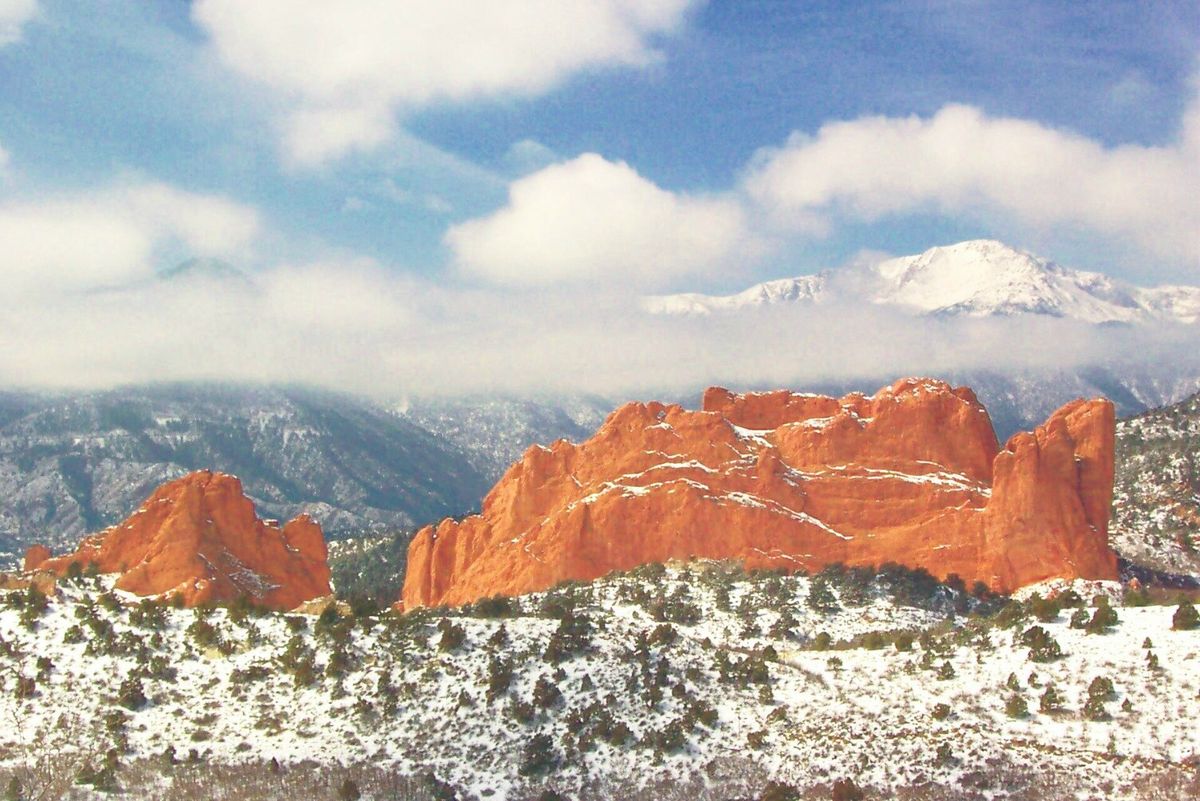

On November 15, 1806, approaching the Colorado foothills of the Rocky Mountains, Zebulon Pike spotted a distant peak that looked like a small blue cloud4. The mountain now carries his name, and the 220th anniversary of that first look falls on Sunday, November 15, 2026. Pike never stood on its summit, and the name came only after a later expedition.
An Army officer sent west
Beginning July 15, 1806, Pike led what became known as the Pike Expedition, after General Wilkinson ordered him to mount a second expedition2. Its goals were to explore and map the region and find the headwaters of the Arkansas River, and it was also a mission to prepare for a possible American invasion of the neighboring Spanish provinces2.
A small blue cloud
At two o’clock in the afternoon Pike made out a mountain to the right that “appeared like a small blue cloud,” and he studied it with the spy glass3. Within half an hour the mountains came into full view, and the men “with one accord gave three cheers to the Mexican mountains”3.
Pike named the mountain Highest Peak1, while his journal calls it the Grand Peak3. In a later entry, written in early December, he worked out its height at 18,581 feet, from an estimated 10,581 feet above the prairie and an assumed 8,000 feet for the prairie itself3. He was far off. The summit stands at 14,115 feet (14,107 feet under the newer NAPGD2022 datum)1.
The climb that stopped short
In his November 23 entry Pike planned to go up the north fork to the high point of the blue mountain3. On November 24 he set out with three companions, Dr. Robinson and Privates Miller and Brown3. On the night of November 26 they camped in a cave, without blankets, victuals or water3.
On November 27 they reached the summit of the chain they were climbing, short of the Grand Peak, and found the snow “middle-deep,” with no sign of beast or bird3. The thermometer, which had read 9 degrees above zero at the foot of the mountain, fell to 4 degrees below zero there3. The summit of the Grand Peak, bare of vegetation and covered with snow, still looked 15 or 16 miles away3, and Pike wrote that “no human being could have ascended to its pinical”3.
He turned back because his soldiers had only light overalls and no stockings, game looked scarce, and pushing on would cost two or three more days3. The lesser summit they reached was probably Mount Rosa5, and they gave up there in waist-deep snow, having already gone almost two days without food2.
Captured, then published
The expedition did not end in Colorado. Spanish authorities captured Pike and some of his party on February 26, 1807, and took him to Santa Fe and then south to Chihuahua City2. In 1810 Pike published an account of his expeditions2.
How the peak got his name
The first documented climb came 14 years later. Edwin James, a botanist who wrote the report of Stephen Harriman Long’s expedition, set out with two others to climb the peak on July 13, 18207, and reached the top on July 146. Long named the mountain James Peak in his honor1. The expedition report appeared in 1823 as Account of an Expedition from Pittsburgh to the Rocky Mountains7.
The older name won out anyway. The mountain was later renamed Pike’s Peak, and in 1890 the U.S. Board on Geographic Names simplified the spelling to Pikes Peak1.
Pike’s Peak or Bust
The gold boom that took the mountain’s name began in July 1858 and lasted until roughly the creation of Colorado Territory on February 28, 18618. An estimated 100,000 gold seekers took part, though the rush was centered 85 miles north of Pikes Peak, largely along the South Platte River at the base of the Rocky Mountains, and it created towns such as Denver City and Boulder City8. The peak lent the rush its name mainly because gold seekers traveling west across the plains could see it, and “Pike’s Peak or Bust” became the slogan of the Colorado gold rush1.
Purple mountain majesties
Katharine Lee Bates, an English professor at Wellesley College, took a train to Colorado Springs to teach at Colorado College9. In July 1893 she wrote the words of America the Beautiful after admiring the view from the summit1. The lines started to come to her on the top of the mountain, and she wrote them down at her room in the original Antlers Hotel9.
The poem first ran in The Congregationalist for the Fourth of July in 1895, under the title America9. Samuel A. Ward had written the melody in 1882 for a hymn and called it Materna, and his music and Bates’s poem were first published together as America the Beautiful in 19109. A plaque on the summit marks the words1.
Up by rail and road
Zalmon G. Simmons, who had founded the Simmons Bedding Company, conceived a railway to the top in 1888 after a trip to the summit, construction began in 1889, and the first train reached the summit on June 30, 189110. The line runs 8.9 miles from Manitou Springs, with grades that top out at 25 percent10. It is the world’s highest cog railroad1. Winter service was suspended on October 29, 2017, and after a complete refurbishment the line reopened in May 202110.
Drivers have another way up. The Pikes Peak Highway is a 19 mile toll road that starts a few miles up Ute Pass at Cascade and is maintained by the city of Colorado Springs1. The mountain stands in Pike National Forest in El Paso County, and its base is in Manitou Springs, about 10 miles west of downtown Colorado Springs1.
Trivia
- In which state was Zebulon Pike born, and on what date? New Jersey, in the Lamington section of Bedminster, on January 5, 17792.
- How did Pike die? He was mortally wounded when a British ammunition magazine exploded during the American attack on York, Upper Canada (now Toronto), on April 27, 18132.
- What did the Ute call the mountain? Tava-Kaavi (Tava is the Ute word for sun), meaning Sun Mountain1.
- What name did early Spanish explorers give the peak? El Capitán, meaning The Leader1.
- Who became the first European-American woman to climb Pikes Peak, and when? Julia Archibald Holmes, on August 5, 18581.
- Which flower, now Colorado’s state flower, did Edwin James become the first to describe on his 1820 expedition? The blue columbine1 (Aquilegia coerulea), which he called the mountain Columbine7.
- Since what year has a motor race, the Pikes Peak International Hill Climb, been held on the mountain? 19161.
Sources
- Pikes Peak, Wikipedia. Accessed November 8, 2026.
- Zebulon Pike, Wikipedia. Accessed November 8, 2026.
- The Expeditions of Zebulon Montgomery Pike, Volume 2 (of 3), Project Gutenberg. Accessed November 8, 2026.
- Zebulon Pike Spots an Imposing Mountain, This Day in History, History.com. Accessed November 8, 2026.
- Pike Expedition, Wikipedia. Accessed November 8, 2026.
- William B. Ashworth Jr., Scientist of the Day: Edwin James, Linda Hall Library, October 28, 2014. Accessed November 8, 2026.
- Edwin James (scientist), Wikipedia. Accessed November 8, 2026.
- Pike’s Peak Gold Rush, Wikipedia. Accessed November 8, 2026.
- America the Beautiful, Wikipedia. Accessed November 8, 2026.
- Manitou and Pike’s Peak Railway, Wikipedia. Accessed November 8, 2026.